

- Last week, Outlook went down and every U.S. flight was grounded. People still took care of each other. Even the next Grand Theft Auto is built to encourage empathy.
- For decades, we’ve asked what going above and beyond does for the customer. This piece asks what it does for the person who goes there.
- Compassion is empathy plus action. Empathy sits in the other chair. Compassion stands up and does something helpful.
- The research is encouraging: helping others lifts the helper’s mood, and it can even make people feel like they have more time.
- It only lasts when teams define it together, with free and low-cost ground rules, so caring never turns into unpaid overtime.
- The Other Chair gives teams four moves: Notice, Picture, Ask, Act. Pick one and try it with your team this week.
Planning a kickoff, offsite, or conference? Send this to whoever books your speakers.
Last week, two systems we all lean on went dark, one day apart.
On Thursday, Microsoft’s Outlook, Teams, and Copilot went down around the world. Hospitals, schools, courts, and government offices were caught up in it. For many people, email didn’t come back until Friday.1
On Friday afternoon, the FAA stopped every departing flight in the country after a telecommunications failure. It was the longest nationwide ground stop in 25 years. Thousands of flights were canceled, and hundreds of thousands of travelers were stranded.2
Friday was also World Kindness Day. (I’m not making that up.)
And here’s what I keep coming back to. In the middle of all that frustration, people took care of each other.
On American Airlines flight 2676, passengers sat on the tarmac for more than two hours. When they finally got off, the captain thanked every one of them, personally. A passenger needed a wheelchair and no staff were around, so he went and got it himself. “He truly cared about each of us,” passenger Jennifer Hannux told PEOPLE.3
In Atlanta, the rental cars ran out. Frankie Cistaro overheard a stranger named David talking through his options to get to Indianapolis. “You want to jump in my car?” Frankie asked. Mariam Hartzler and five other travelers teamed up with strangers headed to Tampa. “It seems like there are a lot of good people trying to get home,” she said.4
The next morning at Dallas Love Field, a Southwest gate agent met a packed crowd at dawn with a cheerful “Good morning, good morning.”5
None of it was required.
And Thursday? I’d bet your team has its own story. Someone picked up the phone. Someone gave a deadline a little room. Someone said, “Don’t worry about it. We’ll sort it out tomorrow.”
That’s grace. When grace turns into action, I call it compassion.
Then came the headline I didn’t see coming. This Thursday, Grand Theft Auto VI launches. It’s the first game in the series that tries to encourage empathy, according to Rob Nelson, co-studio head of Rockstar North. “We’ve tried for the first time in a GTA to provide mechanisms that encourage it, for those who want to,” he told The Guardian. Players can go on dates, hold hands, and pet dogs. The relationship between the game’s two leads is theirs to nurture or lose.6 (Yes, you can still steal the car.)
If the team behind a game about stealing cars is designing for empathy, the rest of us can design for it at work.
We know what those moments did for the people who got help. But did the captain go home proud? Did Frankie feel lighter on the drive to Indianapolis? We almost never ask.
I’ve been on the receiving end of a moment like that.
About 20 years ago, I was out at a restaurant, and I weighed 350 pounds. Partway through the meal, my chair gave way underneath me.
I remember what the staff did next.
They moved fast. They moved quietly. They kept it from turning into a scene. And then they apologized to me, as if it were their fault. It wasn’t. I’d never have blamed them.
I couldn’t tell you their names. I couldn’t tell you what I ordered. But two decades and 150 pounds later, I still remember how they made me feel.
For years, that’s where the story ended for me. Last week, I kept wondering about the other side of it.
What did that moment do for them?
Did one of them go home that night and tell someone about it? Did the manager feel proud of the team? Did it make a long shift feel like it mattered?
I’ll never know. But I think it’s the most important question in business we almost never ask.
Part oneAbove and beyond, for whom?
I grew up professionally in the agency world. Every client relationship there starts with a scope of work. It spells out what you’ll do, by when, and for how much.
And on every team I led, I saw two kinds of people. Some did exactly what was on paper. Some went past it.
I understand both. People are paid for what’s on paper. That’s fair.
But for as long as I can remember, the business world has asked one question about going past the paper: what does it do for the customer?
There are shelves of books on it. And the famous stories are wonderful.
Ritz-Carlton is known for letting employees spend up to $2,000 to fix a guest’s problem, no manager needed. Co-founder Horst Schulze explained why: these guests may spend $200,000 with you over their lives. He also said the full budget had never been used. Usually, “a plate of cookies or a lunch has sufficed.”7
Then there’s Chewy. When Anna Brose’s dog, Gus, died suddenly, she called to return his unopened food. An agent named Jordan gave her a full refund and suggested she donate the food to a local shelter. A few days later, flowers showed up on her porch, signed by Jordan.8
I love these stories. I tell them on stage.
But read them again and notice what’s missing. We know what Anna got. What did Jordan get?
That’s the half of the story I want to talk about. What’s in it for the helper?
One promise up front: everything here works without longer hours or a bigger budget. And it leaves “the customer is always right” on the shelf.
My hope is to bring more humanity back into our work, and to be honest about why that’s good for us, too.
Part twoSympathy, empathy, and compassion
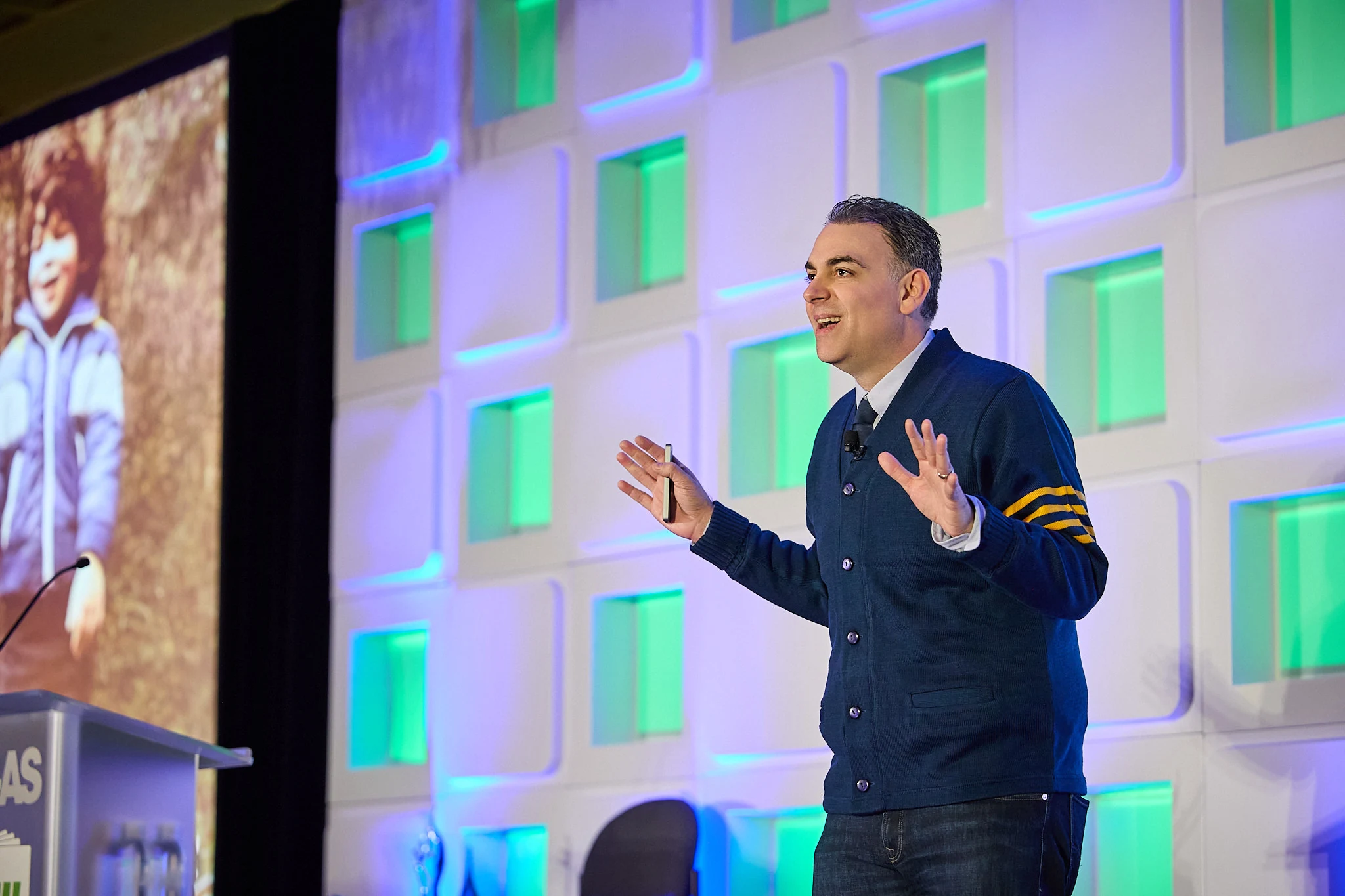
I’ve spent the past year building a keynote around empathy: The Other Chair: Leading with Empathy and Compassion. Empathy means sitting in someone else’s chair and seeing what they see.
It matters. It’s also where most of the conversation stops.
Here’s how I explain the difference. Picture a customer who emails that their order never arrived, and their event is Saturday.
“Oh no, that’s rough.”
“That’s stressful with your event on Saturday. What’s the hardest part right now?”
“I’ve sent a new one overnight. You’ll have tracking by 2:00 p.m., and I’ll check in Friday morning.”
Each one is kinder than the one before it. Only one of them gets the order there by Saturday.
That’s my definition. Compassion is understanding someone’s perspective, then taking an action you believe will make their day, or their life, a little better.
And it doesn’t have to take long. In one well-known medical study, researchers added about 40 seconds of compassionate words to a doctor’s video. Patients who watched that version felt less anxious, and they rated the doctor as warmer and more caring.9
Empathy sits in the other chair. Compassion stands up.Mark Mohammadpour
Why this matters now
Look around. Between loneliness, the political divide, and social media pouring gasoline on both, a lot of us have pulled inward. We’re protecting our time and our energy. I get it.
Work feels it too. Gallup found that 22% of employees worldwide felt lonely a lot of the previous day.10 And there’s a gap between how leaders see themselves and how their people feel. In Businessolver’s 2026 State of Workplace Empathy study, 40% of employees called their workplace toxic, up 18 points in one year. Meanwhile, 98% of executives described themselves as empathetic leaders.11
of employees worldwide felt lonely a lot of the previous day.
Gallup, State of the Global Workplace 2026That gap lives in the space between feeling and doing. Plenty of leaders feel for their people. Fewer of them turn that feeling into something their team can see.
Then add the pace. We’re asking people to do more with less and learn new tools every quarter. Many of those messages come with AI attached. Speed has come at a cost, and human connection is paying it.
One study caught my eye. Researchers in the U.S., Taiwan, Indonesia, and Malaysia found that employees who worked with AI systems more often were more likely to feel lonely. They also had more trouble sleeping. And they were more likely to help their coworkers, which the researchers think may be a reach for connection.12 (It’s a correlation study, so it can’t prove AI caused any of this. Still, it stuck with me.)
People are reaching for each other. Last week proved it: when the technology failed, people were the backup. Let’s give them a reason and a path every week, crisis or no crisis.
And look at the calendar. We’re heading into winter. Shorter days, longer nights. Come January, every ad you see will tell you to fix your body. I’ve lived that journey, all 150 pounds of it, and I’m cheering for you. I’d just add one more resolution to the list: do something good for someone at work, on purpose.
Part fourWhat’s in it for the helper
Here’s the part I want every employee to hear. Being kind on purpose is a little bit selfish, and that’s OK.
Researchers at Oxford combined 27 studies with more than 4,000 people. Doing acts of kindness lifted the well-being of the person doing them. The effect was modest but steady, and it held up across ages and types of kindness.13
It gets better for anyone who feels busy. Across four experiments, people who spent time helping someone else felt like they had more time afterward. That beat wasting time, spending it on themselves, and even getting a surprise block of free time.14
People who spent time helping someone else said they felt like they had more time afterward. That beat getting free time handed to them.
Mogilner, Chance, and Norton, Psychological Science, 2012Meaning matters too. In a university call center, fundraisers spent five minutes with a student whose scholarship their calls helped pay for. A month later, they were spending more than twice as many minutes on the phone. Their weekly donations nearly tripled.15
When we feel the impact of our work on a real person, it shows up in our mood and our sense of purpose. That’s mental and career well-being, from one act.
Now, the honest part. Helping also has a cost.
Researchers at the University of Florida found that helping coworkers made people feel good, but it also wore them out. And the most generous helpers got drained the most.16
There’s a hopeful twist. Neuroscientists Olga Klimecki and Tania Singer trained people to feel other people’s pain. Watching videos of suffering, those people felt worse. Then they trained the same people in compassion. Their positive feelings went up, even while watching the same suffering.17
Feeling everyone’s stress drains you. Doing something helpful about it gives some energy back.
So, if “above and beyond” only happens because your three most generous people keep saying yes, that’s a burnout plan with a nice name.
Compassion has to be a team design.
Part fiveWhat’s in it for the business
Compassion is a human thing first. It also shows up on the balance sheet.
Gallup’s latest study of more than 183,000 teams and work units found that the most engaged teams had 10% higher customer loyalty and 23% higher profitability than the least engaged.18 How your team feels is how your customers feel.
And care flows both ways. Only 24% of employees strongly agree their organization cares about their well-being. Those who do are 69% less likely to look for a new job and 71% less likely to report burnout. They’re also five times more likely to advocate for their company.19
higher profitability for the most engaged teams. 10% higher customer loyalty.
Gallup Q12 Meta-Analysis, 2024less likely to report burnout when people feel their employer cares about their well-being.
Gallup, 2022what a loyal guest may spend over a lifetime, in Ritz-Carlton’s math.
Horst Schulze, Chief Executive, 2022Here’s how I connect the dots. When a company shows compassion to its people, they have the energy to show it to customers. When they show it to customers, they feel the meaning in their work. And that meaning keeps them around.
One more thing. Customer scores and “or else” memos only go so far, especially when people don’t feel rewarded. People care when it’s safe to care, and when they can see what it does for them.
What does compassion look like on your team?
Planning a kickoff, offsite, or conference this winter or in 2027? Let’s find 20 minutes to talk about what your team needs most.
The Other Chair, built for action
The Other Chair is the framework at the heart of that keynote. Its fourth move is the one that turns empathy into compassion: Act.
Each move comes with something your team can try together this week.
Notice: look up
Compassion starts in the first five seconds. Look up from the screen. Read what the person in front of you is carrying.
I teach teams to watch four things: the words someone keeps repeating, their pace, their body, and their silence. Silence is often the loudest. What won’t they ask for?
In your next team meeting, go around the room. Ask each person to name one customer or colleague who seemed to be carrying something heavy this month. No names needed. Just notice.
Picture: sit in their chair
This is the empathy map I’ve used with teams for years. It takes about 15 minutes. Pick a person and answer six questions about them: their role, their goals, their behavior, their influences, their fears, and their hopes.
One trick makes it safe. Start every answer with “Maybe they…” That takes the pressure off being right, so people actually share.
Pick one customer or client as a team. Spend 15 minutes on the six questions. Then ask, “What would make their week easier?”
Ask: then ask one more
Say back what you heard in one sentence: “So what I’m hearing is…” Then ask one more question than feels natural. Every time.
That one extra question is where you find out what people actually need. It’s also where they feel heard.
Leaders, ask your team one question: “What gets in the way of saying yes to a customer?” Write down every answer. Fix one.
Act: think two steps ahead
This is where empathy becomes compassion. Listen. Say yes where you can. Then go one step past the ask.
I give teams a simple question to build confidence:
“If you knew you couldn’t get this wrong, as long as you did right by this person, what would you do?”
Most of the answers cost $0. Learning someone’s name. Walking them to the right person. A sticky note with the time someone will call back. A follow-up call they didn’t ask for.
Rules still matter. Know your policies well enough that the customer never has to hear about them. Policy talk can happen behind the curtain, as a team.
When you’re not sure what to say, say these four lines.
Here’s what I heard.
Here’s what I’ll do.
Here’s when.
Here’s how I’ll check back.
Each person picks one customer or colleague and uses the four-line script once. At your next meeting, share what happened, and how it felt to be the helper.
Compassion lives in the workstream
Here’s my contrarian take. Culture lives with teams. It happens when a team translates a value on the wall into its own daily work.
“We show compassion” looks different for an online support team than for a retail floor. It looks different in Finance than in Sales. So every team needs to define it in its own words, with its own examples.
Not every company can hand out $2,000. Every team can agree on its ground rules: the free and low-cost things anyone can do without asking permission.
Here are four places I’d start.
A new customer or client
What are the first three to five things your team does, every time, when someone new signs on? Write them down. Let AI send the reminders. People do the caring.
A teammate’s hardest week
When someone’s parent dies, there should be a plan before they ask. “You’re away for the next week or two. Please stay off email. We have you covered.”
A new hire
Nervous, excited, and lost. Settle them in, then sit down together: What are your top three priorities? How much autonomy will you have? When should you come to me?
Another workstream
If your team holds special knowledge, give other teams a short “101” on what you do and what you need. Set them up to succeed.
That third one deserves a number. Gallup found that only 12% of U.S. employees say their company does a good job of onboarding.20 That’s a lot of nervous people trying to “hit the ground running” on a track no one showed them.
When the onboarding conversation goes right, both people walk out feeling good. The new hire feels confident about how you’ll work together. The manager knows they did everything they could to set that person up for success. That’s compassion in action.
The fourth one is my favorite, because it gets skipped. A lot of us expect other teams to “just figure it out.” I get that, to a point. But it pushes the work onto the person you’re asking for help.
Think about hiring someone to work on your home. You make sure they can get in the door. You show them where the breaker box is. You point out the room with the tricky floor. You set them up to succeed.
Your colleagues deserve the same walkthrough.
And a word on AI. When a new AI tool rolls out, the message is usually about speed. I’d add a second message: the time you save is time you can give back to people. AI can scan an inbox and pull the top three priorities while someone is away grieving. It can send the reminder to check in on a new client. The call itself is ours to make.
Part eightStart this winter
You don’t need a big program to start. Gather your team for 30 minutes. Pick one of the four places above. Agree on the first three to five things you’ll do, every time. Then ask everyone the question we skip: “How did it feel the last time someone went above and beyond for you?”
Those answers are your why.
Then do it again next month with another place. Small moves, repeated, add up.
I think about that restaurant team more than they’ll ever know. They gave me a moment I’ve carried for 20 years. I hope it gave them something, too.
Because here’s what I believe after all this research: the helper walks away with something too. A better mood. More time, or at least the feeling of it. A reason the work matters. Maybe even a story to tell at dinner. We just rarely say it out loud.
So let’s say it. Taking care of others is good for you, and it’s good for business.
I used to break chairs. Now I help people pull one up.Mark Mohammadpour
Here to help you shine in the family room and the board room,
Mark MohammadpourPlanning a kickoff, offsite, or conference this winter or in 2027?
In my Keynote Conversations™, I share the microphone with the room. In The Other Chair, your people practice all four moves live. In the Empathy in Action Lab training that follows, each team defines what compassion looks like in its own work. Let’s find 20 minutes to talk about what your team needs most.
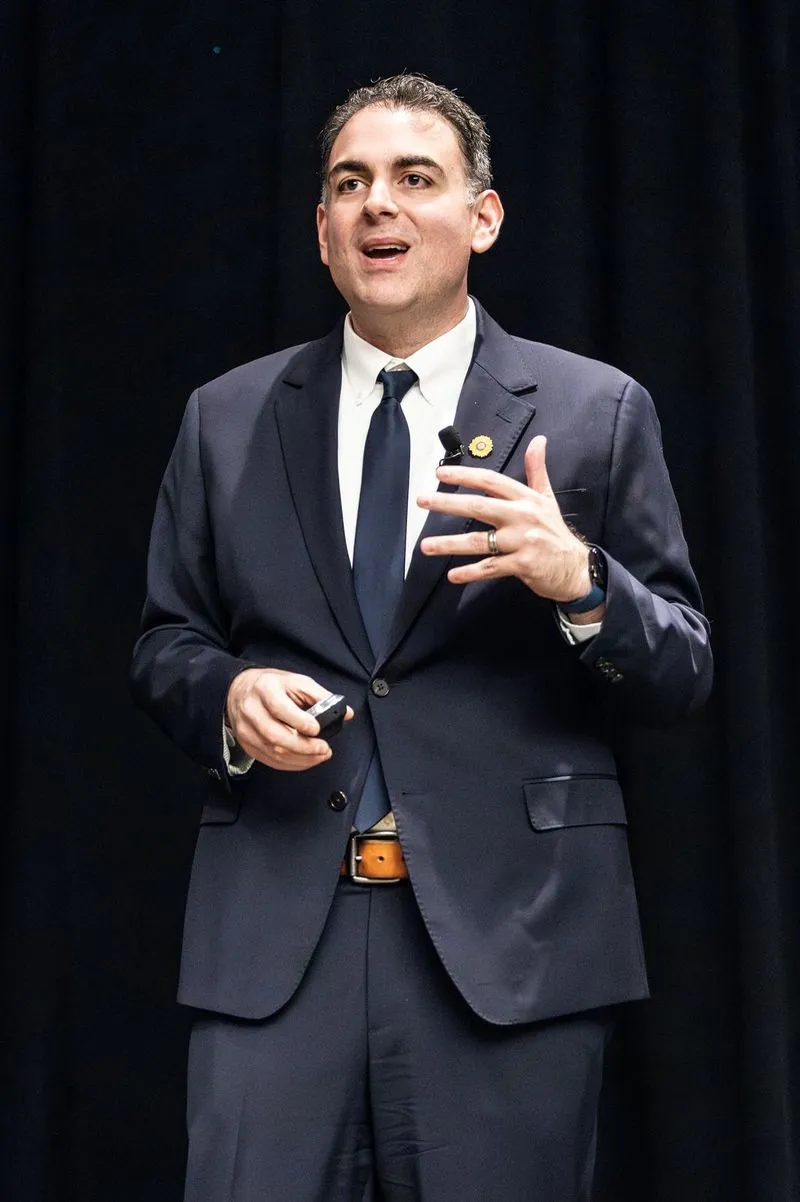
Mark Mohammadpour is a keynote speaker on building healthy teams and founder of Chasing the Sun. He delivers keynotes and leads team offsites that help leaders build healthy, confident, and connected teams. Learn more at markmohammadpour.com.
Sources
- “Outlook outage updates: Microsoft apologizes for email disruption, says there was no hack.” ABC News (Nov. 13, 2026); and “Microsoft services hit by major outage across the world.” NBC News (Nov. 12, 2026). abcnews.com · nbcnews.com
- Associated Press. “Thousands of flights canceled as airlines work to dig out from nationwide ground stop” (Nov. 14, 2026); and Federal Aviation Administration, “Nationwide Ground Stop: Questions and Answers” (Nov. 15, 2026). AP via news4jax.com · faa.gov
- Richards, Bailey. “Pilot Praised for Personally Thanking Each Passenger for Waiting Hours amid FAA Ground Stop.” PEOPLE (Nov. 14, 2026). via yahoo.com
- “With car rentals scarce, travelers affected by nationwide ground stop get creative.” WSB-TV Channel 2 Action News (Nov. 13, 2026). wsbtv.com
- Associated Press. “Thousands of flights canceled as airlines work to recover from nationwide ground stop” (Nov. 14, 2026). AP via inquirer.com
- MacDonald, Keza. Interview with Rob Nelson, The Guardian (Nov. 14, 2026), as reported in “GTA 6 Will Do Something the Franchise Has Never Done Before: Encourage Empathy,” IGN; and “Rockstar says GTA 6 will encourage players to show more empathy,” NZ Herald (Nov. 16, 2026). ign.com · nzherald.co.nz
- “Part II: Ritz-Carlton’s Schulze on Empowering Employees to Think Like Owners.” Chief Executive (Dec. 13, 2022). chiefexecutive.net
- “Grieving dog owner gets surprise when trying to return unused pet food.” KTVU FOX 2 (June 21, 2022). ktvu.com
- Fogarty, L. A., et al. “Can 40 Seconds of Compassion Reduce Patient Anxiety?” Journal of Clinical Oncology 17(1), 1999, as summarized by the Agency for Healthcare Research and Quality. ahrq.gov (archived)
- Gallup. State of the Global Workplace: 2026 Report. gallup.com
- Businessolver. “New Businessolver Research Reveals Alarming Trend: Toxic Workplaces Are Winning, For Now” (June 23, 2026). businessolver.com
- Tang, P. M., et al. “No Person Is an Island: Unpacking the Work and After-Work Consequences of Interacting With Artificial Intelligence.” Journal of Applied Psychology (2023), via the American Psychological Association. apa.org
- Curry, O. S., et al. “Happy to Help? A Systematic Review and Meta-Analysis of the Effects of Performing Acts of Kindness on the Well-Being of the Actor.” Journal of Experimental Social Psychology 76 (2018). ora.ox.ac.uk
- Mogilner, C., Chance, Z., & Norton, M. I. “Giving Time Gives You Time.” Psychological Science (2012), via the Association for Psychological Science. sciencedaily.com
- Grant, A. M., et al. “Impact and the Art of Motivation Maintenance: The Effects of Contact With Beneficiaries on Persistence Behavior.” Organizational Behavior and Human Decision Processes 103 (2007), as reported in “Putting a Face to a Name: The Art of Motivating Employees,” Knowledge at Wharton. knowledge.wharton.upenn.edu
- Lanaj, K., et al. “Integrating the Bright and Dark Sides of OCB: A Daily Investigation of the Benefits and Costs of Helping Others,” Academy of Management Journal; and Lanaj, K., & Wang, M., “When Lending a Hand Depletes the Will,” Journal of Applied Psychology. Summarized in “The Hidden Cost of Helping Your Co-Workers,” UF News (Aug. 5, 2016). news.ufl.edu
- Klimecki, O. M., Leiberg, S., Ricard, M., & Singer, T. “Differential Pattern of Functional Brain Plasticity After Compassion and Empathy Training.” Social Cognitive and Affective Neuroscience 9(6), 2014. pmc.ncbi.nlm.nih.gov
- Gallup. The Relationship Between Engagement at Work and Organizational Outcomes: 2024 Q12 Meta-Analysis (11th ed.). gallup.com
- Gallup. “Showing That You Care About Employee Wellbeing” (Apr. 17, 2022). gallup.com
- Gallup. “8 Practical Tips for Leaders for a Better Onboarding Process” (Aug. 12, 2021). gallup.com